Antarctica’s submarine canyons mapped in unprecedented detail
Scientists have produced the most detailed catalogue yet of Antarctic canyons, using new high-resolution bathymetric (seabed) data from the International Bathymetric Chart of the Southern Ocean.
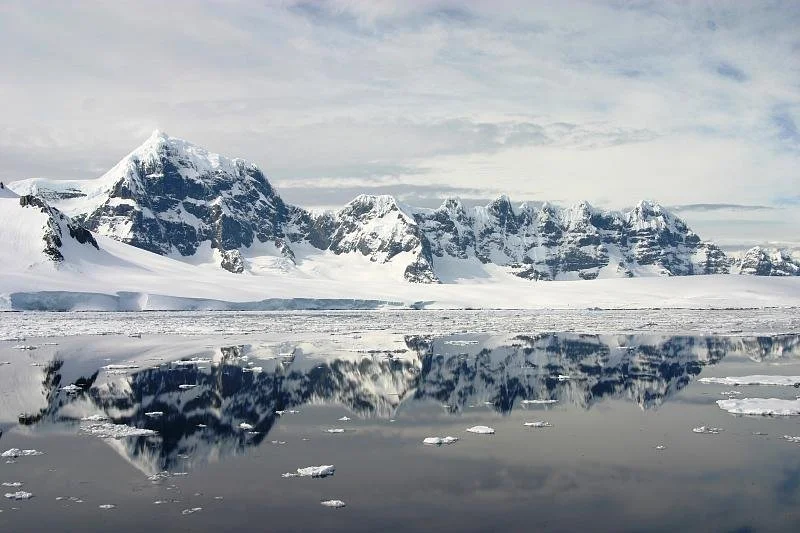
Luigi peak 1.415 m, Sierra DuFief, Wiencke Island. Credit: Georges Nijs (CC BY 2.0)
Their work identified 332 canyon networks - five times more than earlier studies! Some plunge more than 4,000 metres into the depths. This discovery is particularly significant given that only ~27% of Earth's seafloor has been mapped in high resolution, suggesting many more canyons likely remain undiscovered globally.
The study from Riccardo Arosio (University College Cork) and David Amblàs (Universitat de Barcelona) reveals striking differences between East and West Antarctica. In the east, there are sprawling, branching canyons with U-shaped profiles. In contrast, western canyons are shorter and steeper, with V-shaped profiles. These findings add weight to evidence that the East Antarctic Ice Sheet is older and more persistent than its western counterpart.
But submarine canyons are more than geological curiosities. They transport sediments, channel nutrients, and act as pathways connecting shallow and deep waters. Critically, they influence how warm and cold waters move, potentially influencing the melting of floating ice shelves, ocean circulation, and sea-level rise.
Why it matters: Understanding Antarctic canyons improves our ability to predict how ice, ocean, and climate interact. By integrating these canyons into climate models, researchers can improve predictions of ice loss, ocean circulation shifts, and sea-level rise, helping coastal communities prepare for the future.
Read the paper The geomorphometry of Antarctic submarine canyons (open access)