Whale sharks in West Papua face preventable injuries
Whale sharks are the largest fish in the sea - but they’re also among the most endangered. Globally, numbers have dropped by more than half in the past 75 years. The threats are many and include fishing, entanglement in fishing gear, and the degradation and loss of critical habitat.
One area whale sharks like to congregate is the Bird's Head Seascape off Indonesian West Papua. A new study from Edy Setyawan (Elasmobranch Institute Indonesia) and colleagues has found that many whale sharks spotted by the researchers and citizen scientists in this area have scars and injuries caused by people.
Most injuries are minor abrasions from rubbing against fishing platforms called bagans, or from contact with boats. As whale shark tourism grows in the area, so too does the risk of injury.
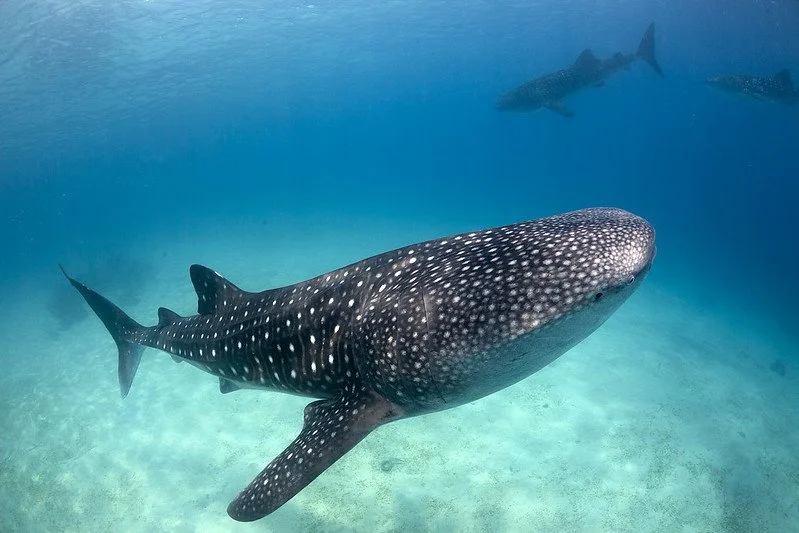
Credit: Klaus Stiefel/Flickr (CC BY-NC 2.0)
Fortunately, the researchers say these changes may be preventable. They recommend removing sharp edges from nets and outriggers that can injure the whale sharks. They also stress that boats near bagans (whale sharks are often spotted near bagans, so that is where the tourism boats go) should follow established whale shark tourism codes of conduct.
Why it matters: This study shows local threats to whale sharks in the Bird's Head Seascape are preventable. With simple fixes, communities can both safeguard these iconic animals while strengthening whale shark tourism as a sustainable livelihood.
Read the paper Insights into the population demographics and residency patterns of photo-identified whale sharks Rhincodon typus in the Bird’s Head Seascape, Indonesia (open access)